Prior to living in Village Homes, Sara has lived in Lyme, Connecticut; Shanghai, China; Stoughton, Massachusetts; and many other locations as a “Navy Brat” including New Hampshire, Rhode Island, Virginia, North Carolina; and Hollis, Oklahoma as a Vista volunteer. Reed grew up on a citrus farm in Covina, California, and has lived near Leesville, Louisiana, and Little Creek, Virginia. Sara and Reed have lived in San Pedro, CA; Covina, CA; Pomona, CA; Solano Park, UC Davis; Douglass Ave., Davis. We came to Davis in 1970 for a summer class at UCD. We liked bicycle-friendly Davis, the university, and that Davis seemed to be a good place for our three-year-old daughter, so we decided to continue our studies here. After living in Solano Park (married student housing, UC Davis) for five years, then central Davis for two years, we were considering buying a house in Davis when we learned of an available lot in VH and thought it would be more interesting and satisfying to build our own house rather than to buy an existing house. We participated in the design and most of the construction of our house. Reed also helped with the construction of several other houses in VH. Having an opportunity to build our house was a primary attraction. We were less aware of the larger design features and philosophy of Village Homes at that time but soon gained a greater appreciation of the development and felt that we had made a better decision to build here than we initially realized.
Sutter Buttes
Sara (left) and her sister inspect our vacant lot, view to the north.
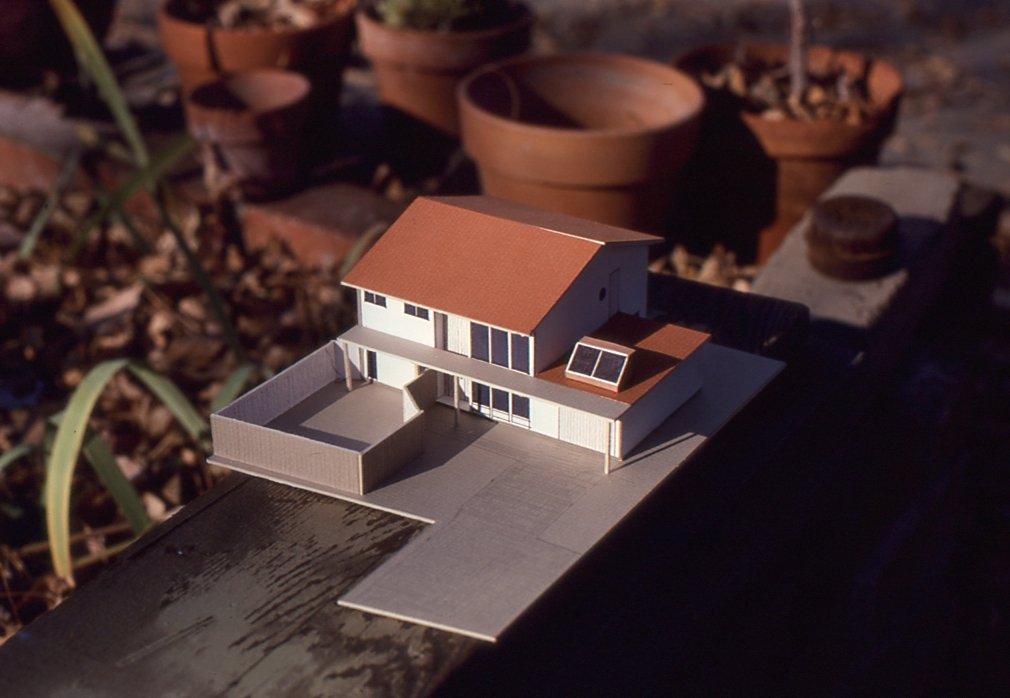
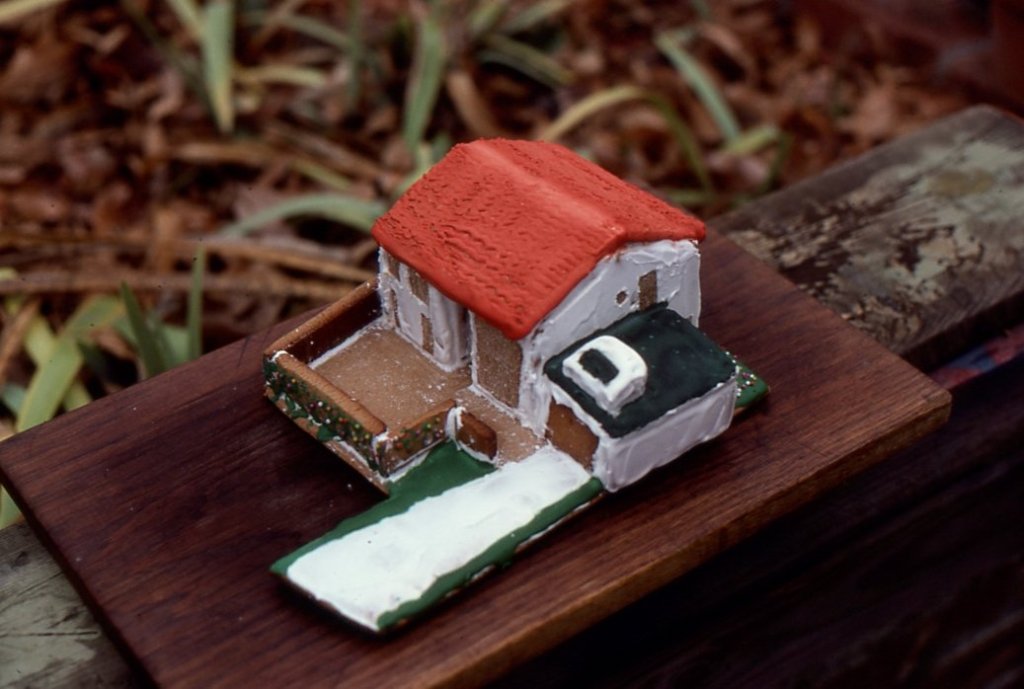
Models of our house.
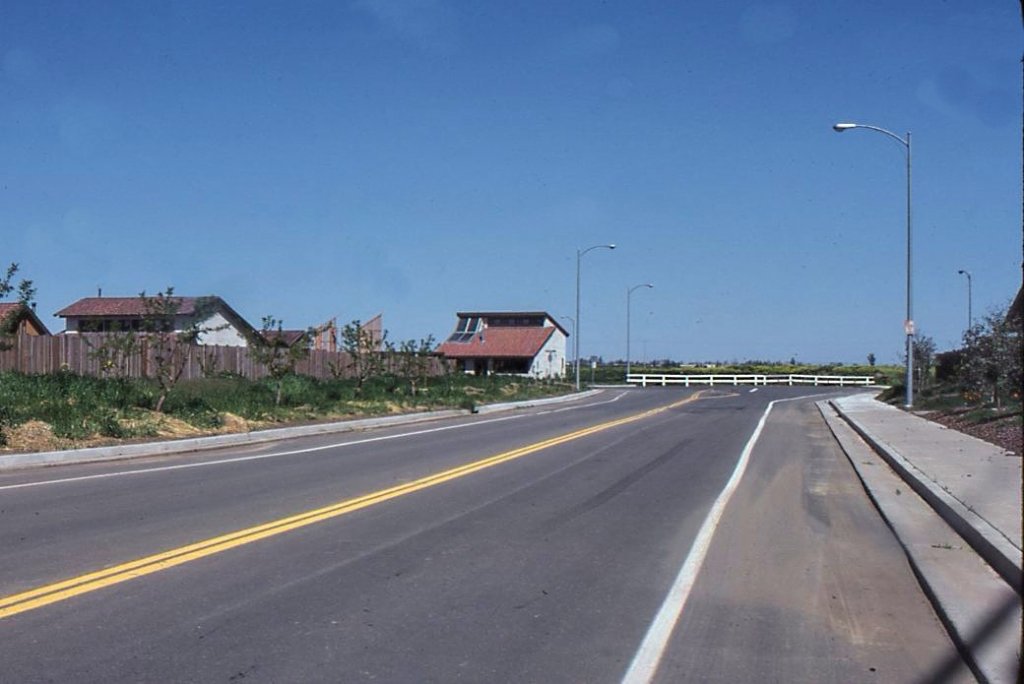
When we began working on our house on Westernesse in November 1978, Arlington was barricaded at Westernesse / Calaveras, and the fields to the north were dedicated to agriculture. The dirt roads surrounding the fields were favorite jogging routes. When working on the upper level of our house, we could see the Sutter Buttes. After building our house, we could still see the Buttes from our upper-story windows, but not for much longer. They are missed! From our garage roof, we could watch July 4 Community Park fireworks, now obscured by trees. From the fields, firework displays in Davis and surrounding towns were visible.
Arlington barricade at Westernesse and Calaveras.
Vegetation Having been primarily field crops, Village Homes had essentially no trees. When we had live Christmas trees we planted them after Christmas. At least two remain near Figgy Park. We planted a peach tree in our yard and canned 40 quarts of peaches each season for several years. The area is now shaded by a very large neighboring sycamore tree – no more peaches, but the shade is nice during hot summers, and raking “tons” of leaves during fall is great exercise! Mike Corbett gave our common area some birch trees which have added a pleasant canopy. It is now difficult to imagine how stark our landscape was.
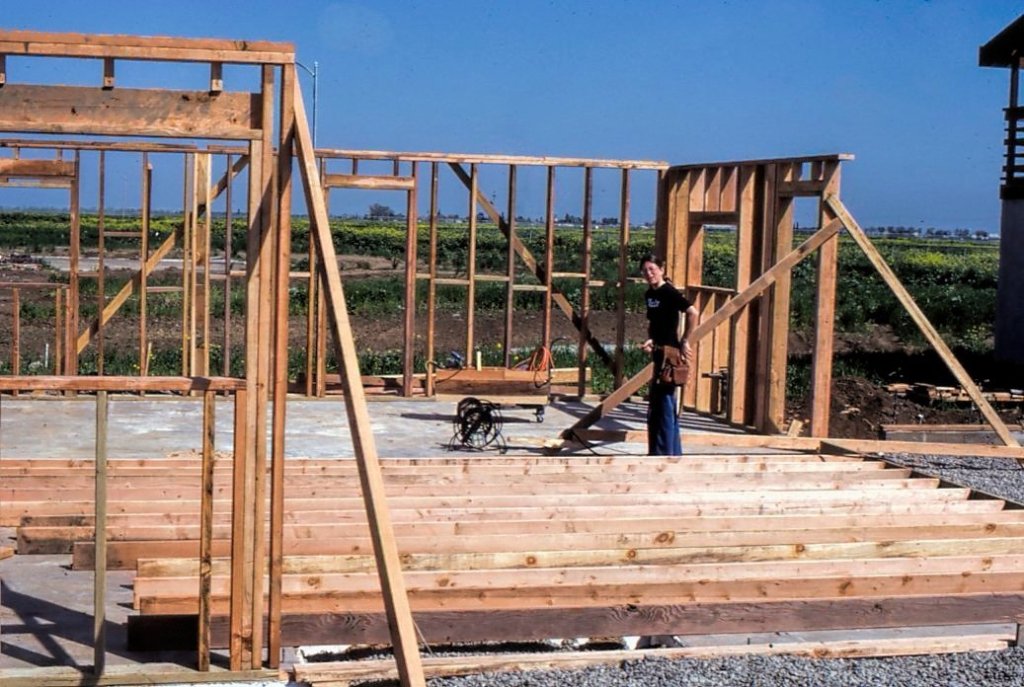
House Building: Large, Heavy Windows We participated in the design and most of the construction of our house. During the construction of our house, ten large windows were ordered for a south-facing framed wall. Each window was 7 feet by 21.5 inches and consisted of three panes of glass, a total of thirty panes mounted in aluminum frames. When the windows were delivered one calm afternoon, Reed stacked them in upright layers against the frame of the house. They were heavy and layered so they were considered to be secure due to their weight. The calm afternoon turned into a very windy night, and the strong gusts blew the windows away from the frame (or maybe they were pushed?). All ten windows, thirty panes of glass, were broken: 376.25 square feet of broken glass!
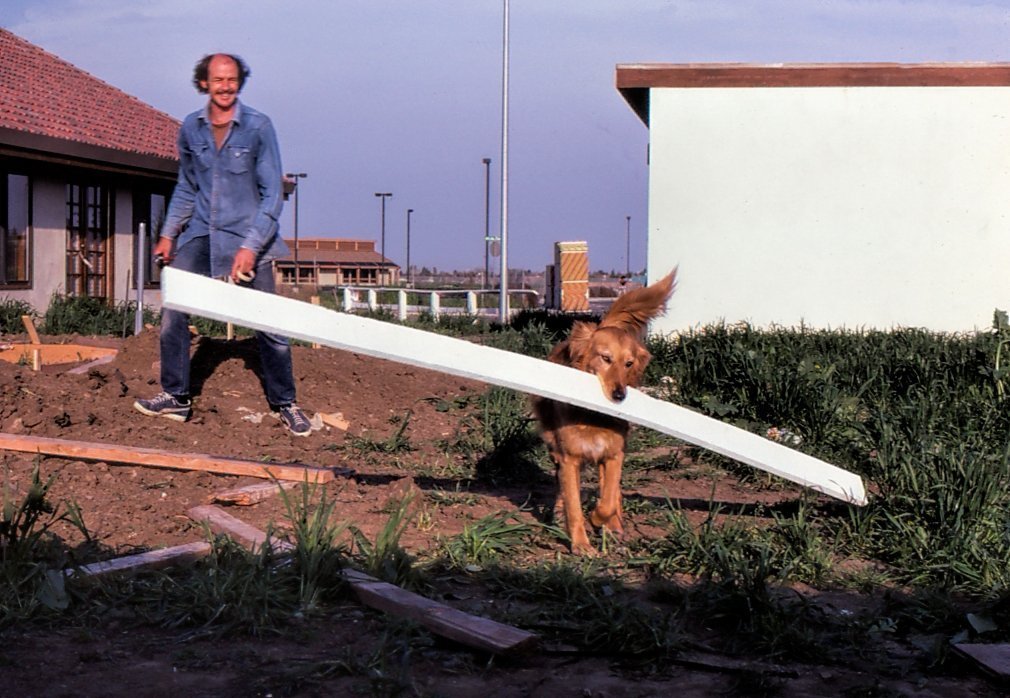
Poppy helped.
Sarah framing the East wall on Sunday, her day off.
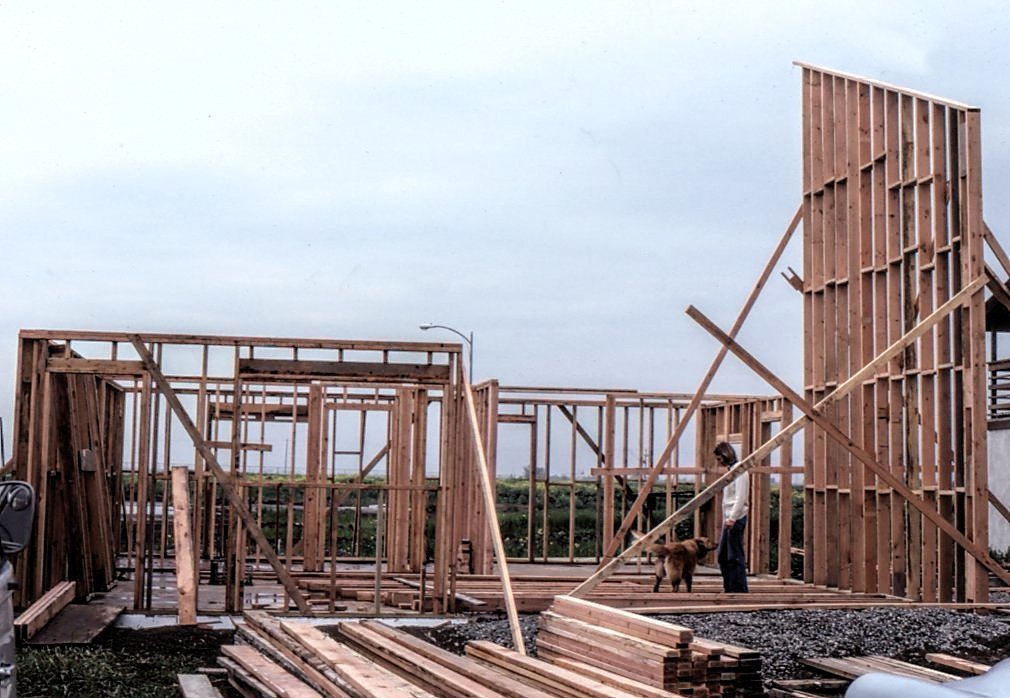
East balloon framed wall, tilted up. Poppy and Virginia Thigpen.
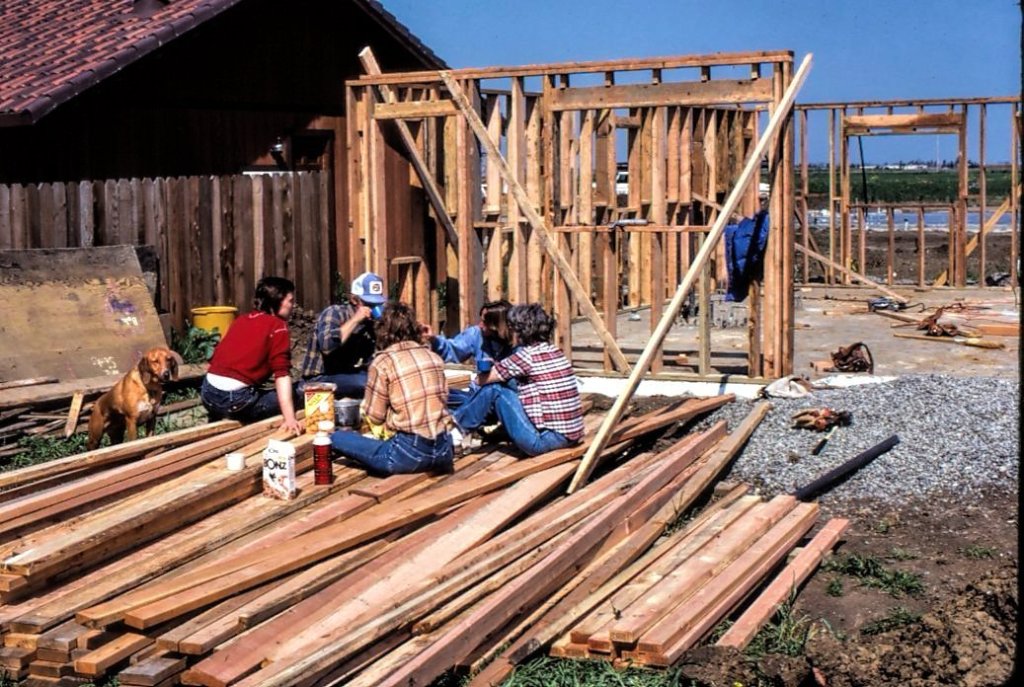
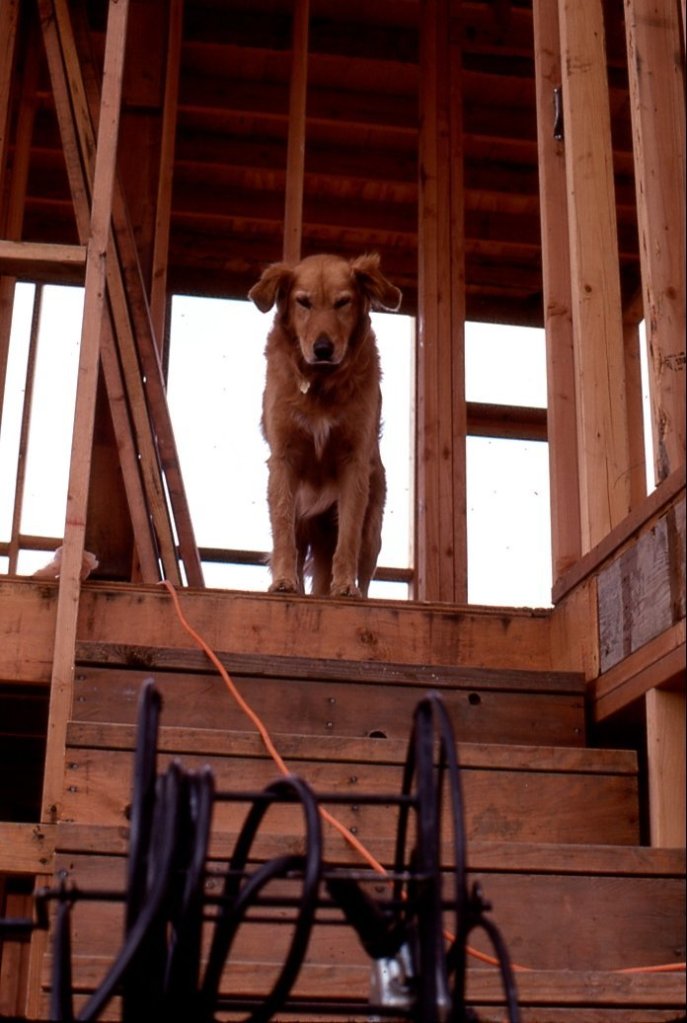
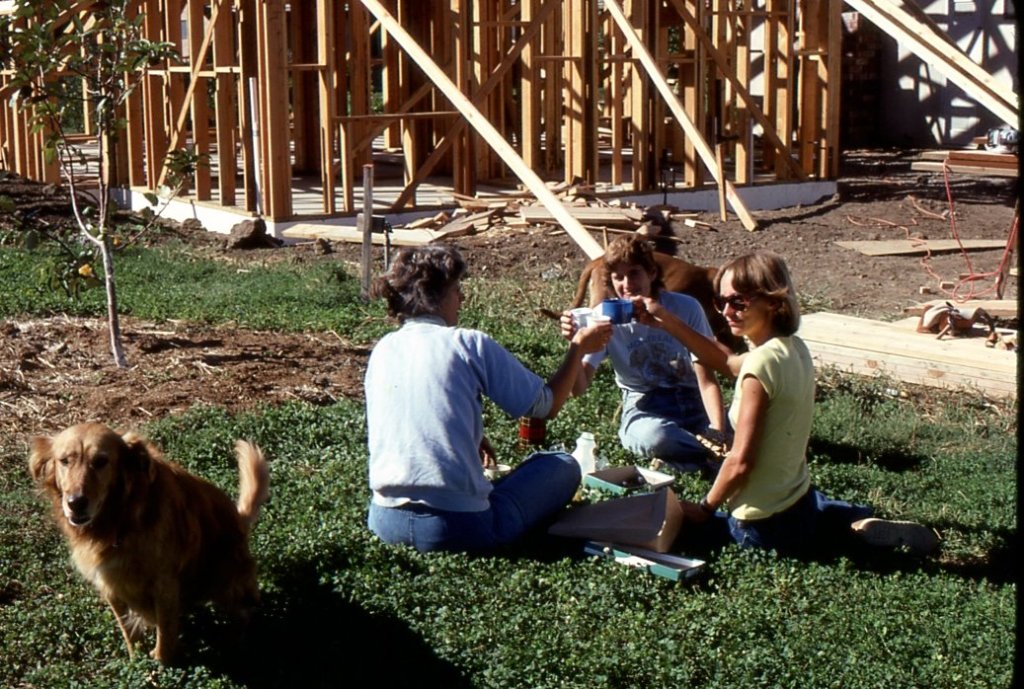
Coffee break on Westernesse. Left to right: construction dog Fay, uncertain, Marshall Hunt, Kristen Kolb, Virginia Thigpen, Valerie Anderson The breaks were always enjoyable. Members of the crew often contributed their own home-baked cookies and cakes. Sometimes pieces of lumber and plywood would serve as a low table covered with a tablecloth! The construction dogs, Fay and Poppy, were very fond of coffee breaks.
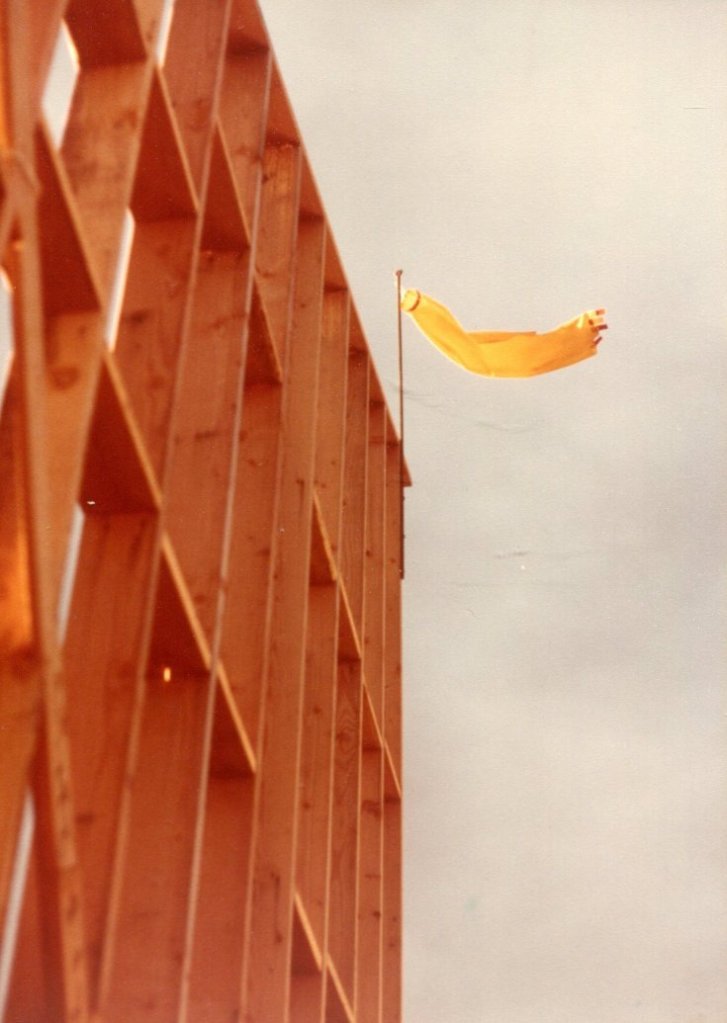
Sara’s handmade sunfish windsock
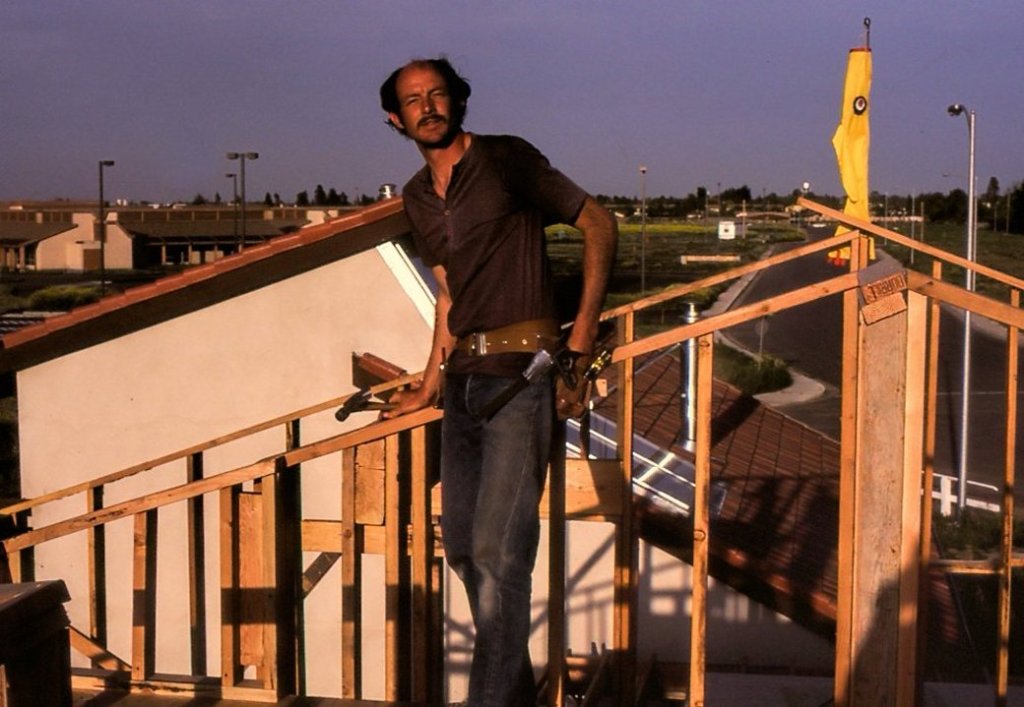
Reed nailing off loft beam. Left background; Emerson Jr High, Right; Calaveras Ave.
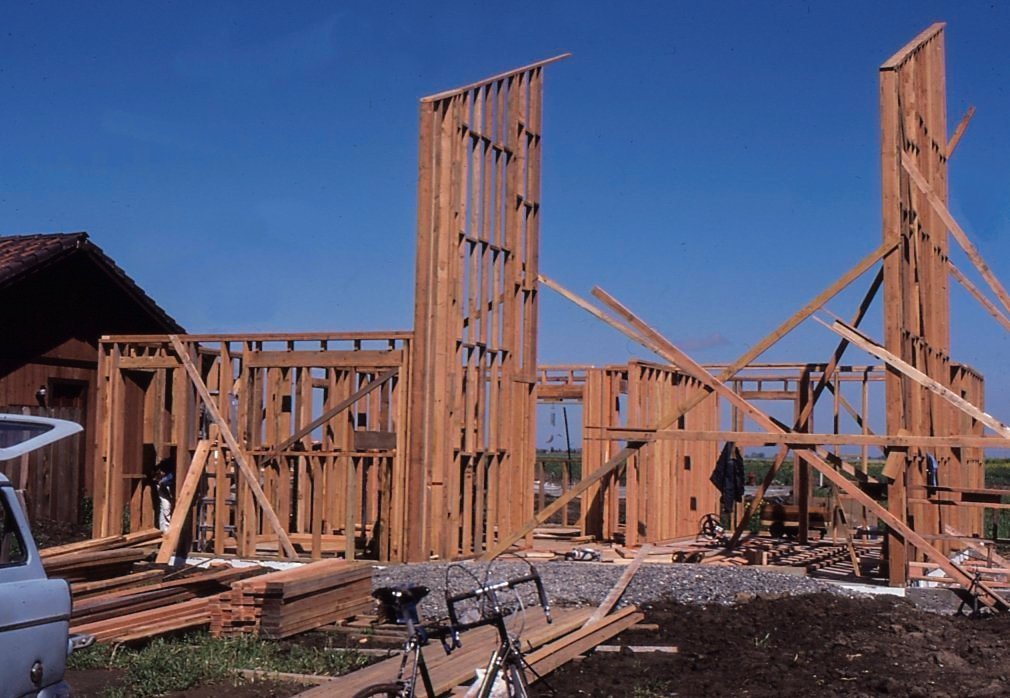
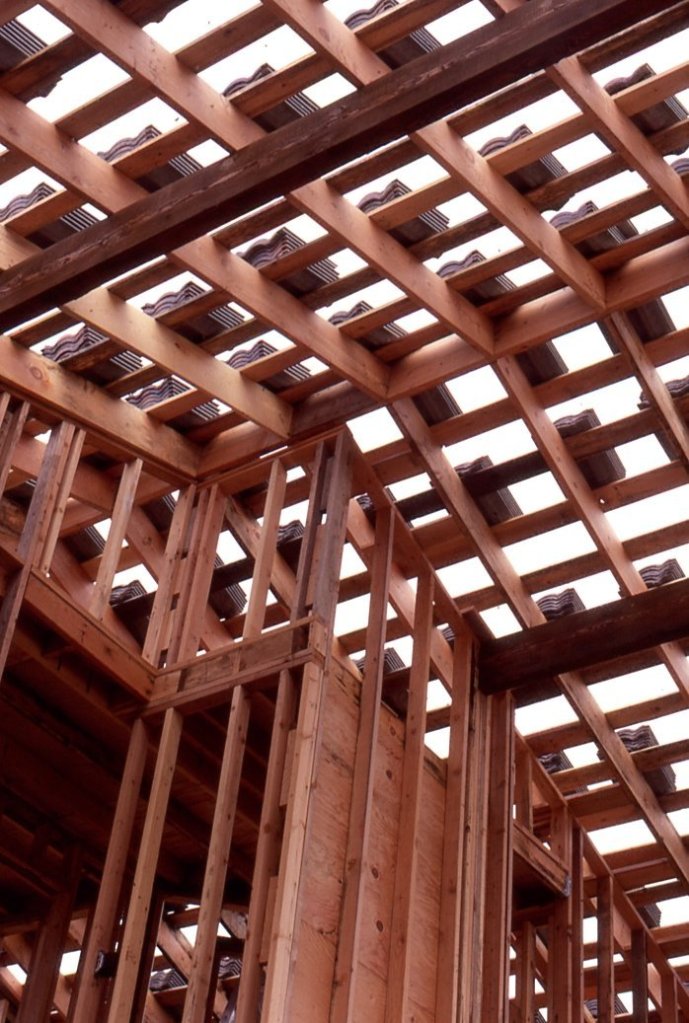
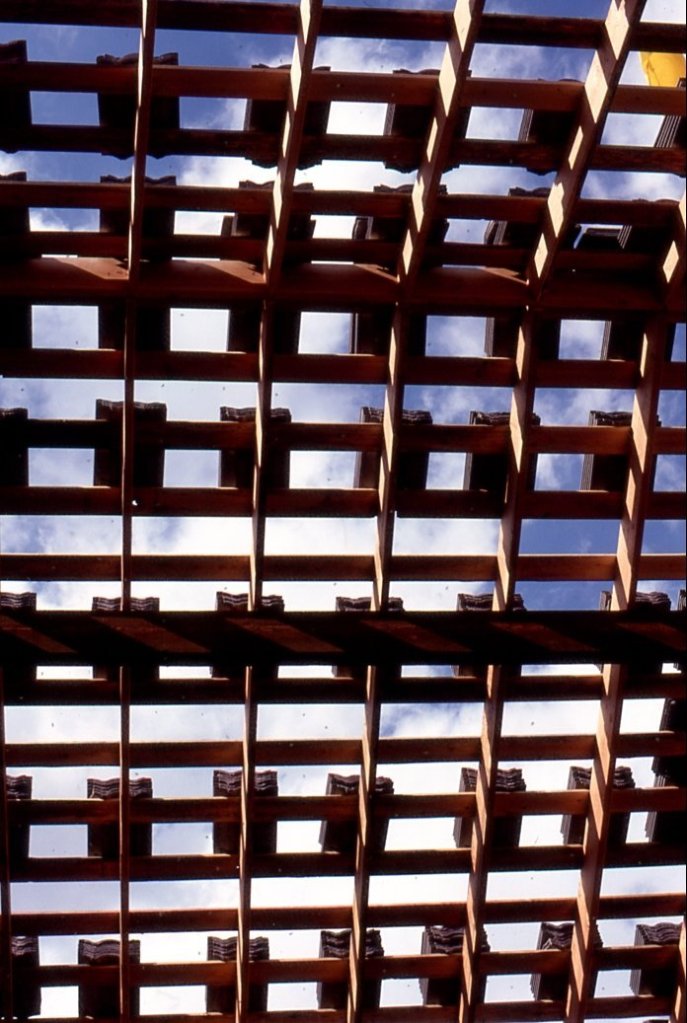
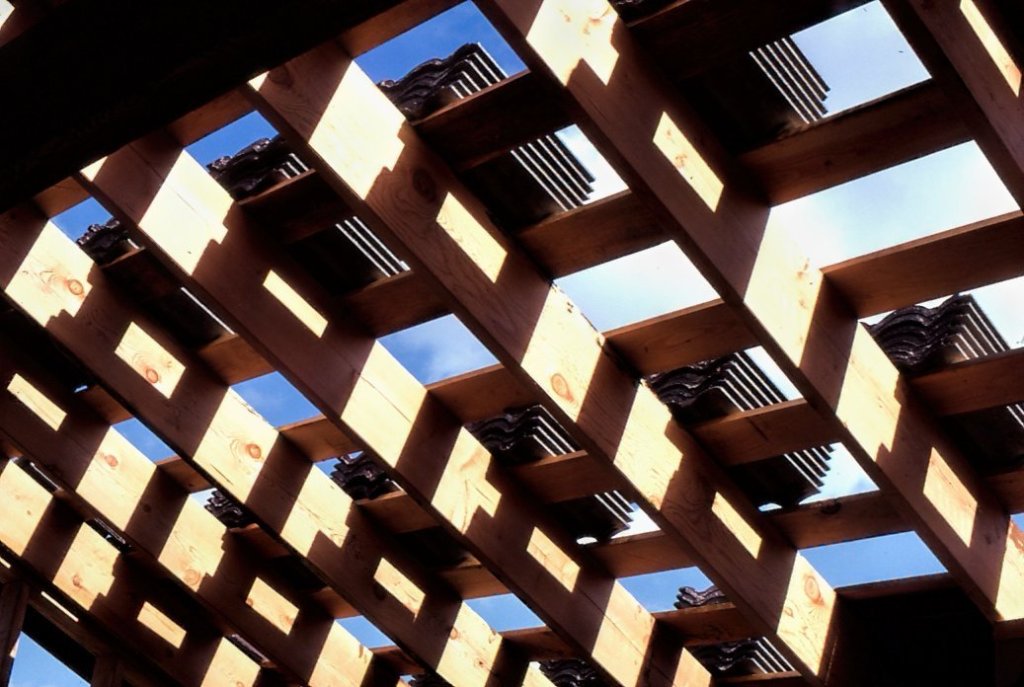
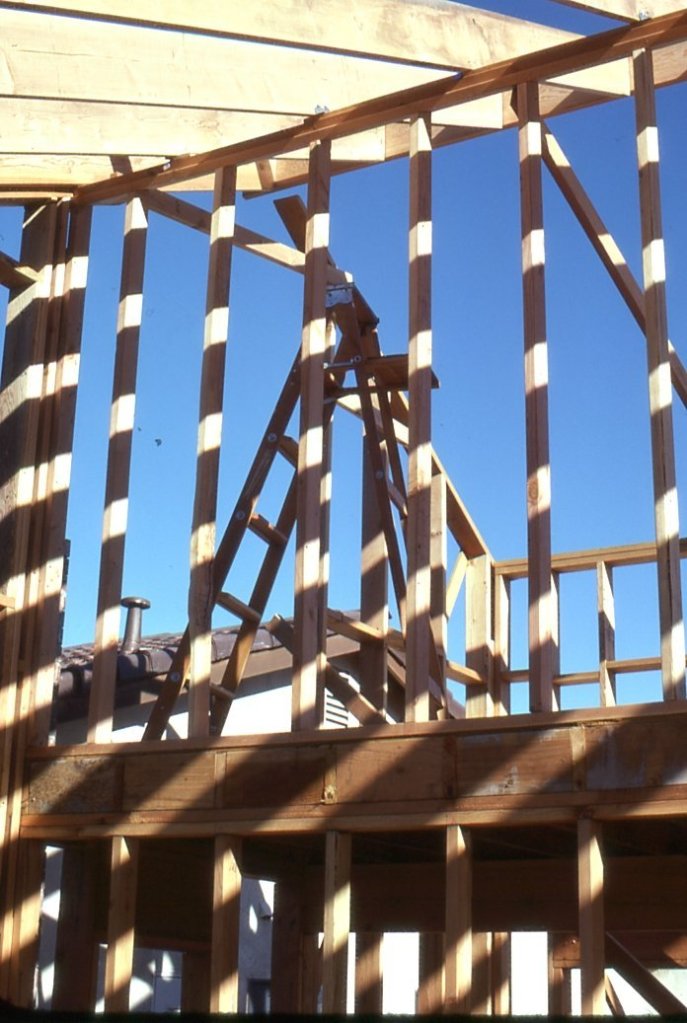
As the house developed, the framing created shapes, patterns and shadows which changed throughout the days, adding unexpected interest to the project.
Poppy supervised.
The Physical Plant The house we built has been quite pleasant. We were required to install a wall heater to satisfy loan requirements. We have never used the heater, nor do we have air conditioning. The house has performed quite well regarding energy use. The house is modest. However, when a group of German exchange students visited us several years ago, looking up at the vaulted ceiling one of them exclaimed that we lived in a castle. Comparatively, we do live in a castle. And, it did get a little cold last winter, just like an old castle.
Roof Garden As trees matured and began providing more shade, our vegetable garden area diminished. Because our flat garage roof had the greatest sun exposure, and there was an existing water faucet and an upper-level access door, we created a vegetable garden on the garage roof. We used 7 1⁄2 gallon nursery containers filled with our own recipe of lightweight potting soil and rigged up an electric lift that could raise/lower two pots at a time to/from the roof. Having done a roof loading calculation, the pots were set on wood pallets to spread the load and protect the roofing material. An automatic drip and fertilizer injection system was installed, generally activated three times a day for one minute. We grew peppers, beans, tomatoes, etc., in thirty containers, never having any issues with snails or weeds! It was a wonderful place to sit and read, or to spread out a cushion for an afternoon nap.
Garage roof garden. Our breadbox water heater was also located on the garage roof (it was featured in Sunset Magazine, September 1979). Unfortunately, the fiberglass glazing on the breadbox deteriorated to the extent that rainwater had been infiltrating and damaging the interior of the breadbox and, eventually, the roofing material. The breadbox had to be removed in order to repair the roof section under the breadbox, so the garden was removed to replace the damaged roof and the entire roof covering. The breadbox enclosed four forty-gallon water tanks and the heated water was piped to the gas water heater. Depending on the weather, the temperature of the breadbox water could be as high as 140 degrees F, thus reducing the amount of fossil fuel used to heat water. When the tanks were removed there was a considerable amount of black sludge drained from the tanks, built up over many years, hopefully contained in the bottoms of the tanks and not contaminating our hot tap water. This discovery was disconcerting. Tanks had been used for solar water heating long before the Village Homes development but were often considered to be a Village Homes innovation. After the sludge discovery, we decided not to replace/rebuild the breadbox, but have considered restoring the roof garden.
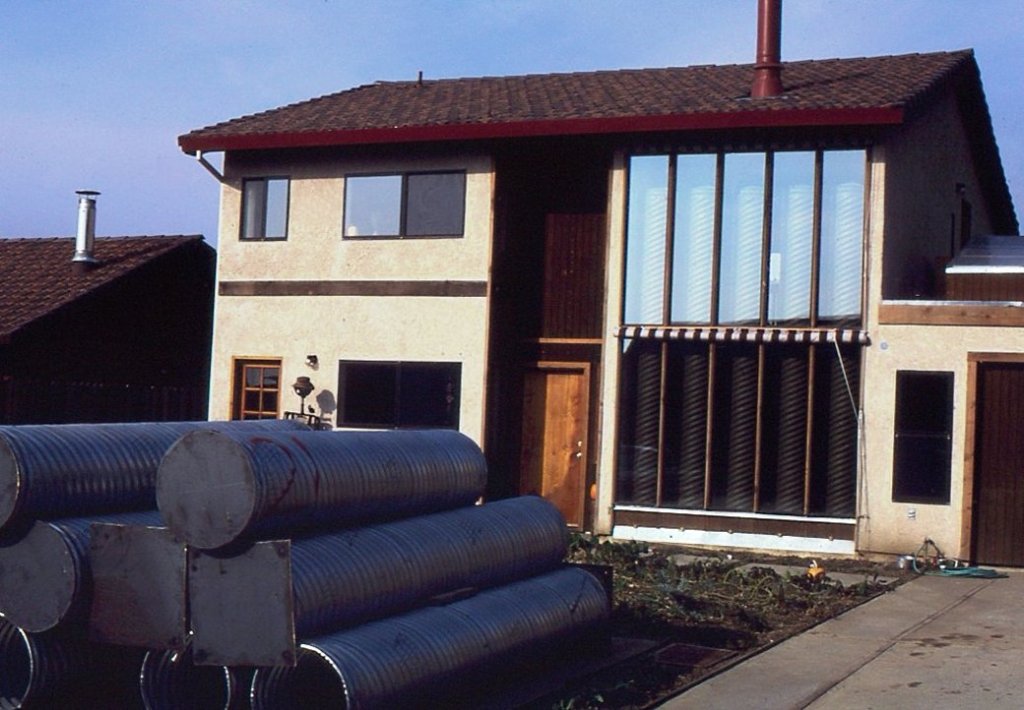
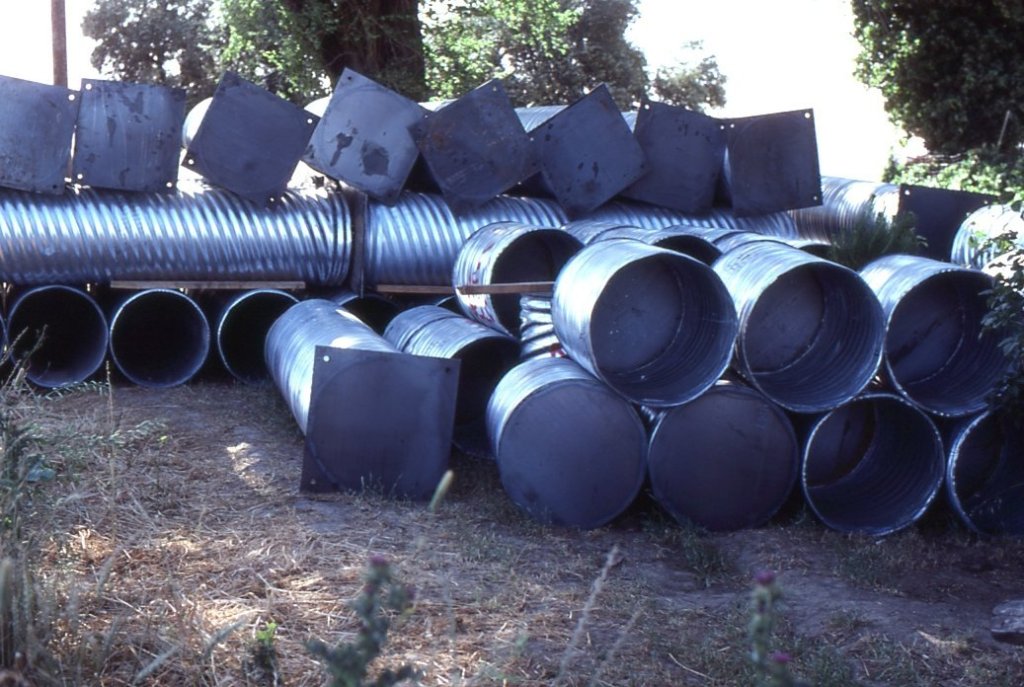
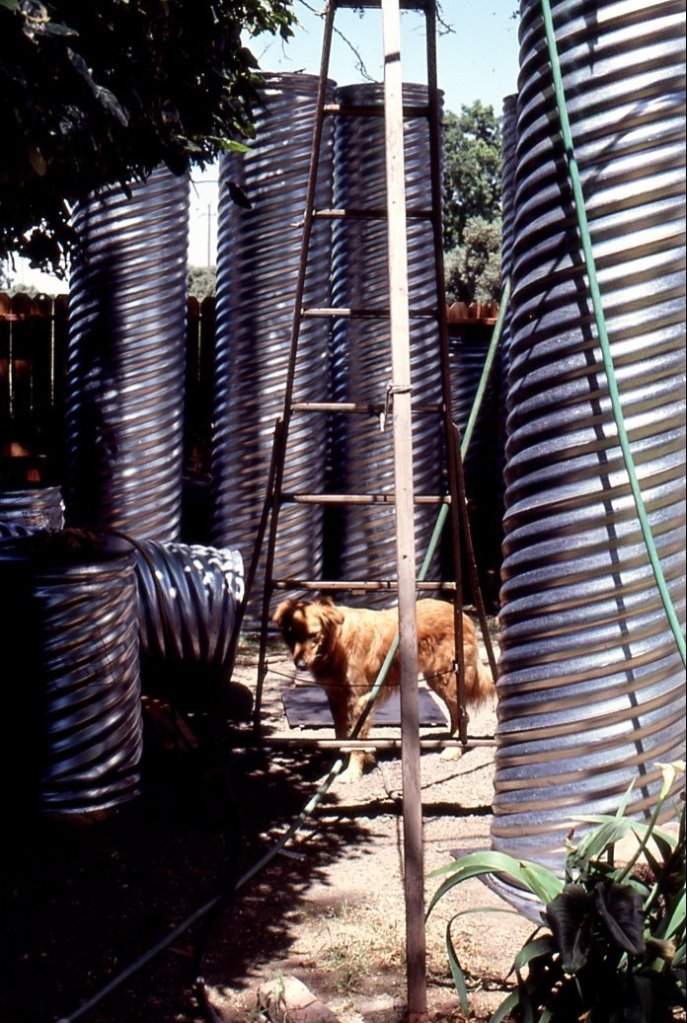
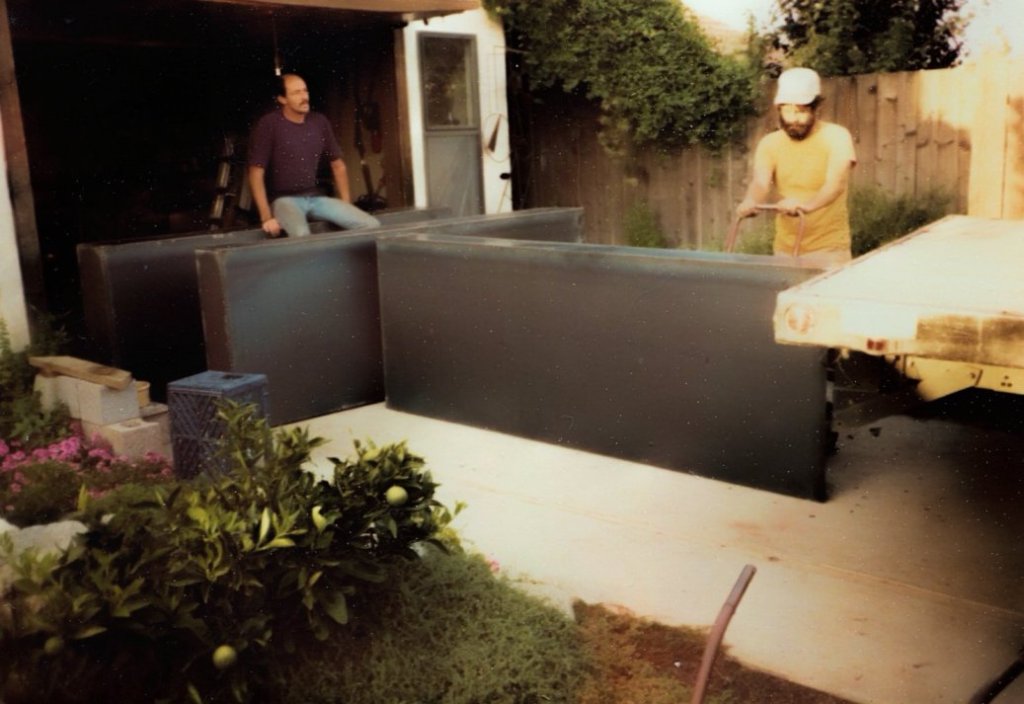
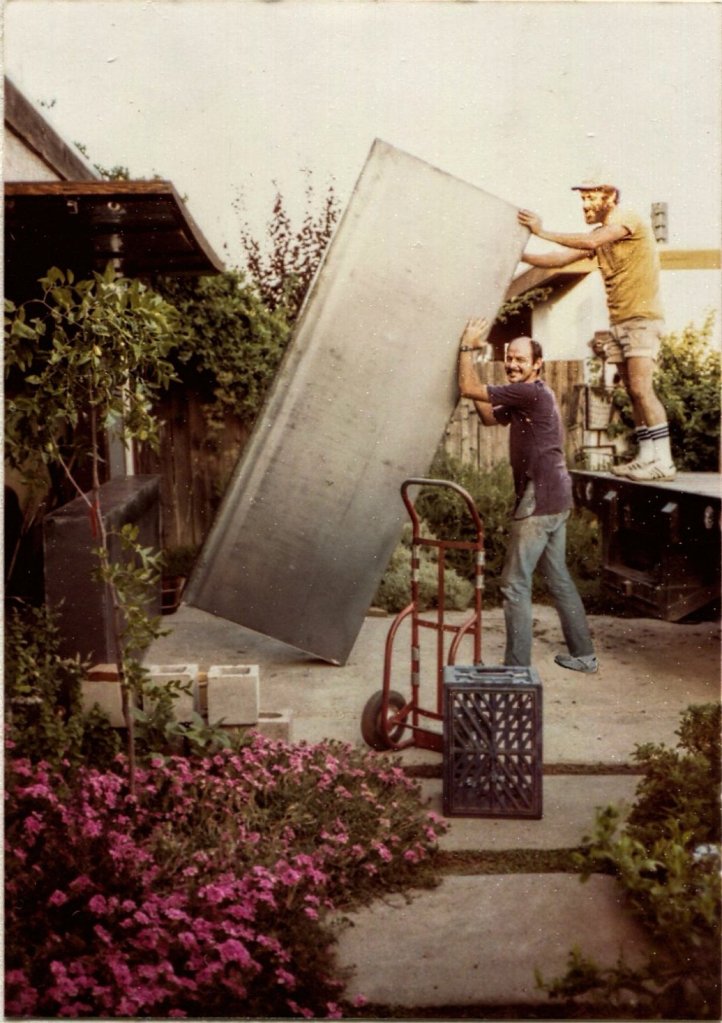
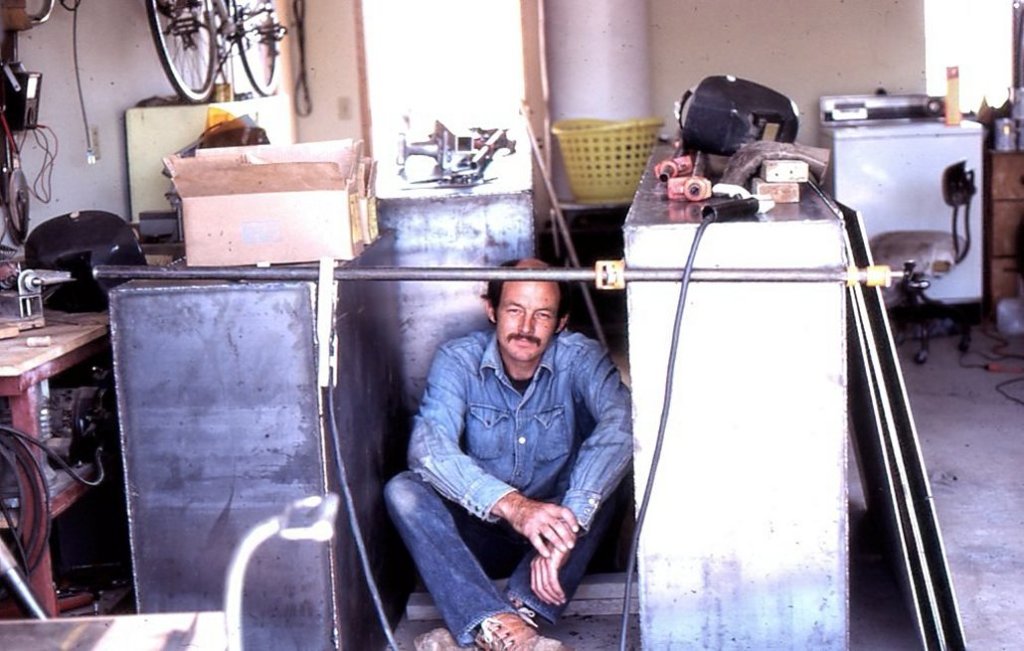
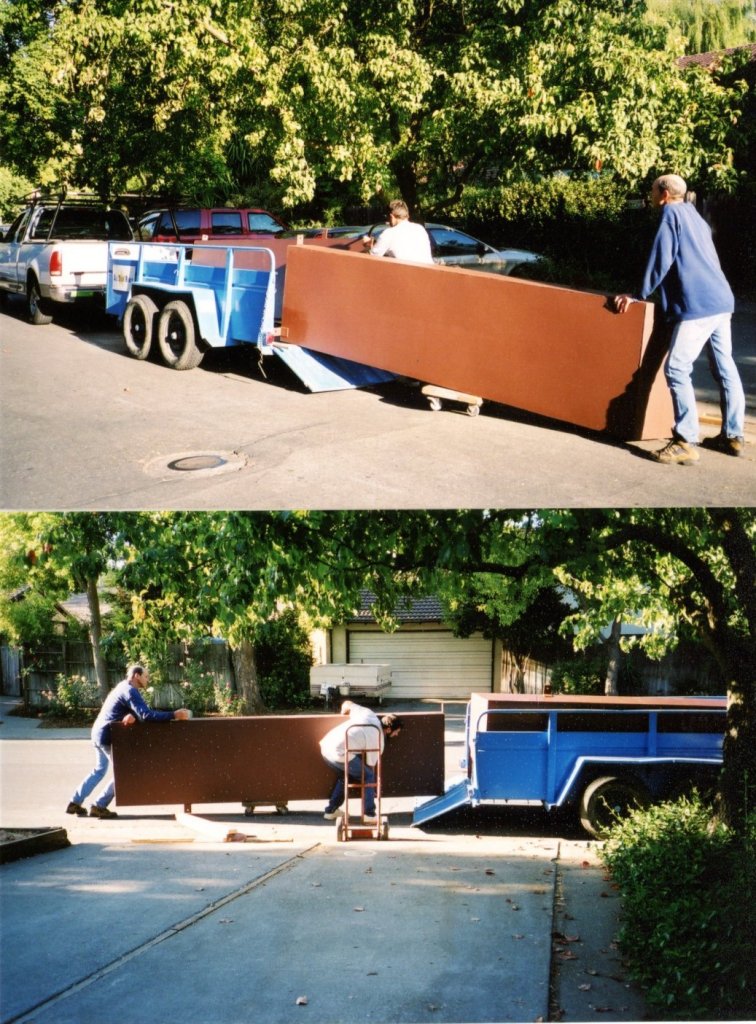
Construction Zone Reed built two steel thermal storage tanks for one of the early houses on Bucklebury which, unintentionally, led to the fabrication of many more tanks, and some tank music. The visitor parking bay in front of our house was sometimes stacked with steel culverts waiting to be turned into thermal storage tanks. Our area was still essentially a construction zone. There were fewer residents, no demand for parking, and no complaints.
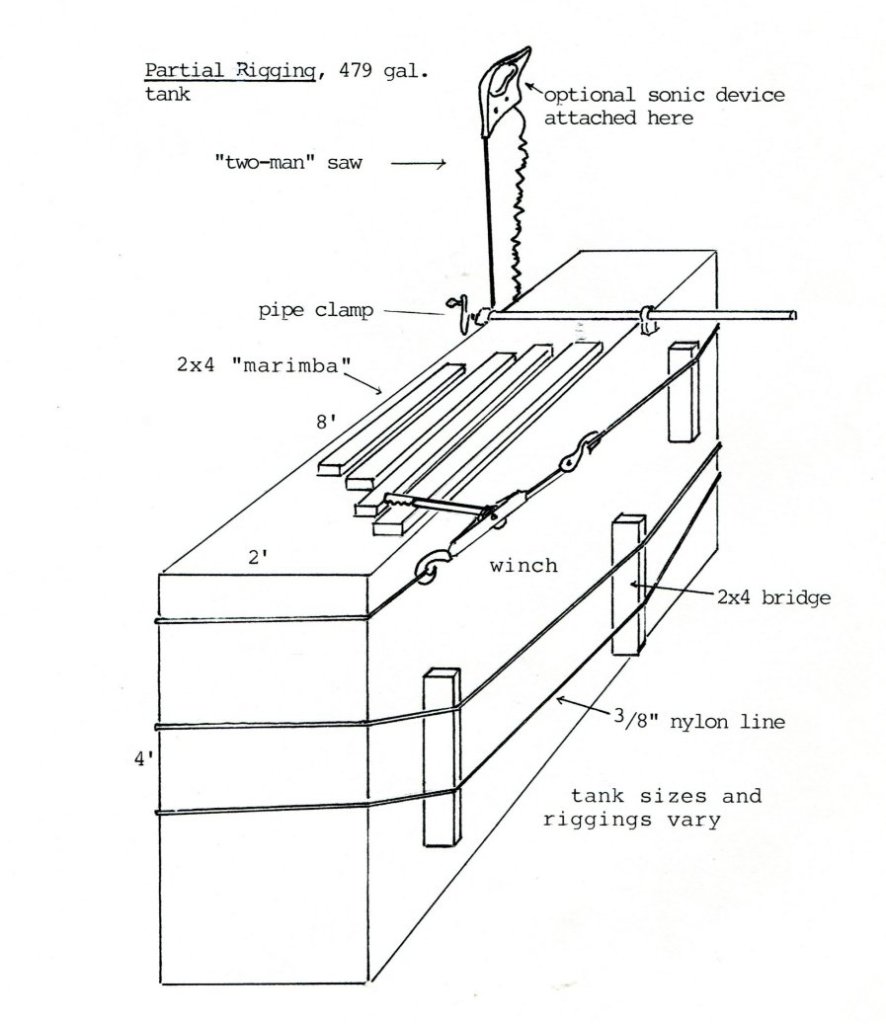
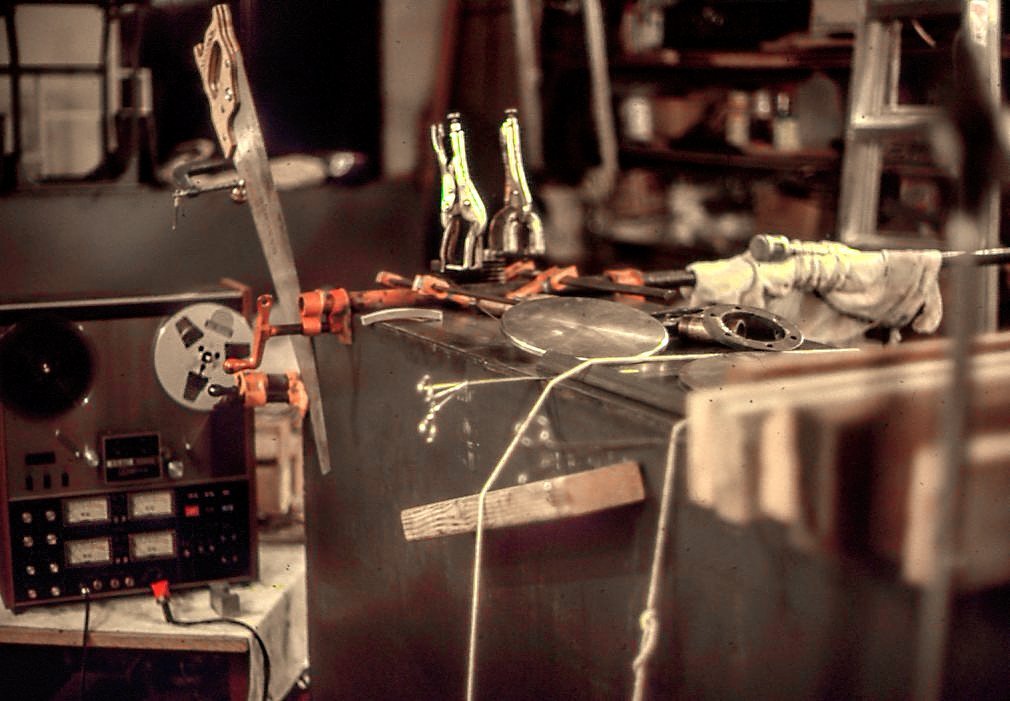
Tank Music The thermal tanks were constructed of either re-purposed, cylindrical culverts or sheets of 10 gauge mild steel. The 10 gauge tanks were rectangular, constructed to specified sizes, and were resonant, which suggested their use as temporary musical instruments. The contractor, Denny Long, and Reed collaborated. Denny ordered and delivered the flat sheets of steel to Reed, which he then welded together, then the two of them would deliver the tanks to the job sites and install them. Prior to removing the tanks from the garage shop on Westernesse, Denny and Reed would sometimes “rig” the tanks into temporary musical instruments using nylon rope for strings, tightened and tuned using a hand winch, and lengths of two-by-fours for movable bridges. Pipe clamps were used to attach the blades of handsaws vertically to the tank, handle at the top which, when gently pushed, would oscillate like inverted pendulums, serving as the rhythm section. Two or more saws would generate interesting polyrhythms. Sometimes bells were attached to the saw handles to add some sparkle to the generally low frequencies. Any other items found in the shop could join the band, such as heavy steel discs slightly propped on edge and activated to rock on the top of the tank. After rigging a tank, recording equipment would be set up and a musical invention created and recorded, the musicians mindful of the moving saw blades. The recordings were given titles based on the client’s name and the specifications of the tank, such as Corbett #18 [the 18th tank built for Mike Corbett]; January 4, 1980; Time, 6 minutes; 40.47 cubic feet; 302.73 gallons; 499.76 lbs., dry. Or, Processional/Corbett #21; January 10, 1980; (etc.). At least one of the recordings was played on an avant-garde music program on KPFA radio. A Tank Music article and recording were published in the Experimental Musical Instrument Journal (EMI), in December 1998. Now, some of these “celebrity” tanks are living in Village Homes houses, performing quietly.
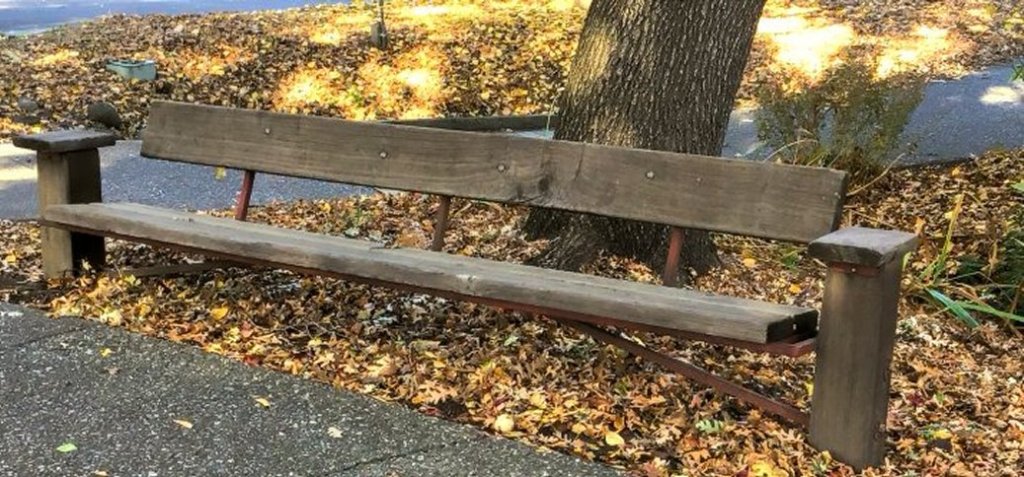
Village Homes Benches 1993-2023 The original mailboxes in Village Homes were individual, unlocked “boxes” with rounded tops, and sets of them were installed on horizontal beams supported by two 6″ x 6″ posts set about eight feet apart. The Post Office installed new, centralized key-operated boxes which left the old mailboxes and supports unused. In May 1993, a few years after the old mailboxes in our common area had been vacated, Reed removed the cross beams, shortened the support posts, and built a steel frame sized to fit between the posts and designed to support a seat and back, and attached armrests to the tops of the cut-off posts. The mailbox posts became the legs and armrests of a bench. On more than one late-night occasion someone drove a car into Parque Chico and spun donuts in the grass. The solution was to block the north access with large boulders and an eight-foot bench similar to the original bench. Later, a bench was added in the area in memory of Molly Alden. The benches continued to propagate. There are now fourteen Village Homes benches of essentially the same design and a 15th under consideration. The most recent installation was in October 2023. Only the original bench made use of the mailbox posts, although the old posts remain in several locations in the village, some of them cut to grade level but can still be seen.
The first bench, 30 years later.
Other Activities
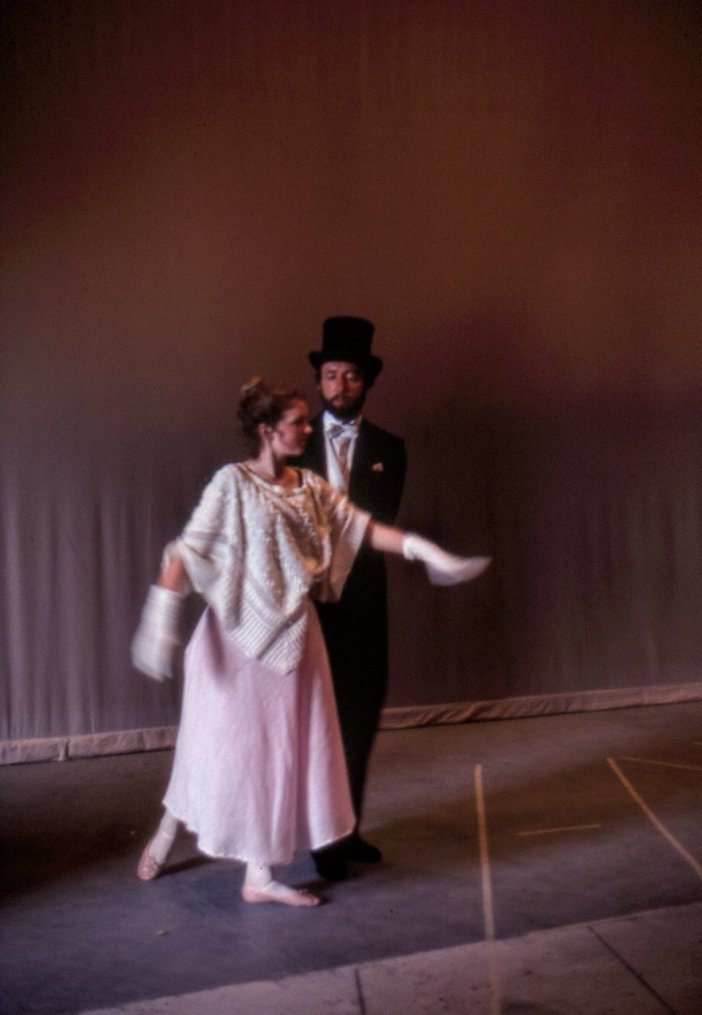
Reed enjoyed participating in the almond harvests, a rather large event that included a mechanical tree shaker driven here from a Winters orchard. The harvest was one of the largest work parties with volunteers of all ages. The almond harvest in 1981 produced about 600 pounds of almonds (Village Newsletter, September 1981). The almond orchard was lovely, especially during spring blossoming, and is greatly missed. Reed has also participated in many one-man work “parties,” doing things not generally seen, such as altering the length of the playground slide to comply with playground safety codes, adding reinforcing angle iron to the rails of the fence on the west side of the Figgy Park playground (they were often broken from being jumped on), repairing hinges and frames on the trash bin gates, fabricating and installing reinforcing brackets on playground equipment, etc. He also fabricated many gates and at least one upper deck railing, all serving as personal reminders of interaction with the community, seen and unseen. We have attended Performers’ Circle. Elaine Fingerett and Reed were featured performers on one occasion, playing xylophone and guitar arrangements of music from the African continent. They also played for the VH Crafts Fair. We have enjoyed walking and jogging with our dogs over the years, gardening, and harvesting produce (including jujubes!). We haven’t used the pool for decades, although Reed repaired one pool cover dolly and assembled another, the extent to which we’ve “used” the pool. Our daughter’s marriage and reception took place at the community center. Our daughter, Dawn, enjoyed ballet and rehearsing at the Village Homes dance studio, and participating in various productions. She was somewhat taller than the typical female ballet dancer. For a production of Peter Pan, Lisa Corbett paired Dawn with Lisa’s father to portray Mr. and Mrs. Darling, as their statures were complimentary. To our knowledge, the presentation may have been Mike Corbett’s exclusive ballet performance.
Dawn and Mike as Mrs. and Mr. Darling in Peter Pan.
Some Village Homes Features We like not having through streets and enjoy the pleasant common area paths, as well as the community garden buffer zone, the variety of land use, the non-linearity, and general visual and spatial contrasts. Our impression is that Village Homes was more relaxed and easy-going in the earlier years. As the community has grown, so have the rules and conflicts. The perception and enforcement of some “violations” often seem to be subjective and arbitrary, as well as some of the more recent, or updated, rules. Community “spirit” seems generally congenial, although we know at least one original family that moved due to unpleasant interactions in VH. It seems that problems are sometimes generated needlessly. During our first couple of college years, we lived in a rather rough neighborhood in Southern California, arriving home one night to find The Grim Reaper spray painted on our door. The move to married student housing, Solano Park, on the university campus was quite a contrast. The kids could play outside in safety, our young daughter would walk to the far side of the complex to visit a friend without her parents worrying. In some ways, Village Homes felt like an extension of Solano Park! We are reminded of a line from a Frank Zappa movie, “A real nice place to raise your kids up.”
Live In Peace We knew nothing of the “peace pole” project until after the installation. While we admire the execution and craftsmanship of the poles, we wonder to what extent the poles, as well as the weed walk, safety walk, and walkabouts, contribute to a more cohesive community. The Memoir Project This project stirred up some unpleasant memories. The suicide of a young neighbor will always be a difficult, sad recollection. Somewhat less difficult, but still unsettling, was the discovery of a “peeper” at our daughter’s bedroom window. Our house was not entirely complete when we moved in. There were no blinds or curtains on several windows. Reed installed a hinged, opaque screen on the peeped-in window the next day.
Don’t Pick The Fruit Early on, after some VH fruit trees began producing, Reed and his father were walking through the village. Someone who was “always hungry” during the Great Depression, as well as being a citrus grower, his father was greatly disturbed by all the fallen, wasted fruit. Reed’s rather inadequate comment was, “I guess if we hadn’t planted any fruit trees, there wouldn’t be any wasted fruit.” When a niece from Maine was visiting us around 1983, she and our daughter went for a walk in the village. Not being familiar with some California fruit trees, she pointed at a tree near a resident’s house and asked what kind of fruit it was. A resident rushed out and exclaimed, “Don’t pick the fruit!” There have been several, more severe, fruit confrontations, such as a VH resident confiscating a bag of fruit that someone had picked. We have often felt embarrassed for our community regarding both the possessiveness and wastefulness of our produce, the jujubes, plums, and figs that are walked and driven on. But, don’t pick the fruit! However, a preferred memory is of an elderly woman picking up fallen jujubes. Reed had just harvested several one-gallon food storage bags of jujubes from the tree in our yard, more than we could possibly use. Reed rode his bike home, got a large bag of jujubes, rode back, and offered them to the woman. She began speaking an unfamiliar language to Reed and walked to a vehicle that contained several bags of snacks similar to what we’ve seen in Kim’s Asian Food Market on 4th Street, and insisted that Reed take three bags of Asian snacks in exchange for the jujubes. What a pleasant, unexpected exchange!
On Being Famous Village Homes has attracted many visitors over the years. Many or most residents know about Francois Mitterrand’s visit but probably don’t know about the Japanese tourists who walked into our house one day, explaining in broken English that Mike Corbett said it was okay. We’ve never confirmed it with Mike, but suspect there was a misinterpretation. Our first privacy fence consisted of a crop of corn. Since there were many “drive-by” photographers, we enjoyed the temporary privacy provided by the corn and decided to move more quickly in building a permanent privacy fence. One day, after the fence was finished, two men were standing on the bumper of our VW bus, which was parked in the driveway outside the fence, in order to obtain a better view of our house. They said that they came from Italy to see Village Homes. Reed has some regrets about not being more welcoming and friendly, but standing on our vehicle was a rude way for them to introduce themselves.
Good Fences Make Good Neighbors? We have mixed feelings regarding the fence-less, open common areas. We enjoy seeing other gardens, including the gardens that are attempting to return to a “more natural state.” Walking through the common areas is usually quite pleasant, more so than if the yards were fenced. Gardening can be relaxing, meditative, and therapeutic. Having solitude without distraction or feeling “exposed” can enhance the positive aspects of gardening, but can be somewhat compromised in an open garden. Having both fenced and unfenced outdoor areas is a good solution, although we question whether the open common areas in fact encourage interactions with neighbors as intended. We are inclined to think that positive interactions depend more on the specific individuals rather than whether a yard is fenced, but we do enjoy and prefer open common areas.
Frame shadows, Bucklebury.
Another coffee break, Bucklebury. Cheers!
Left to right: Poppy, Valerie Anderson (owner-builder), Kristen Kolb, behind Kristen is her dog, Fay, Virginia Thigpen, contractor.






 VH community memoir
Leave a comment